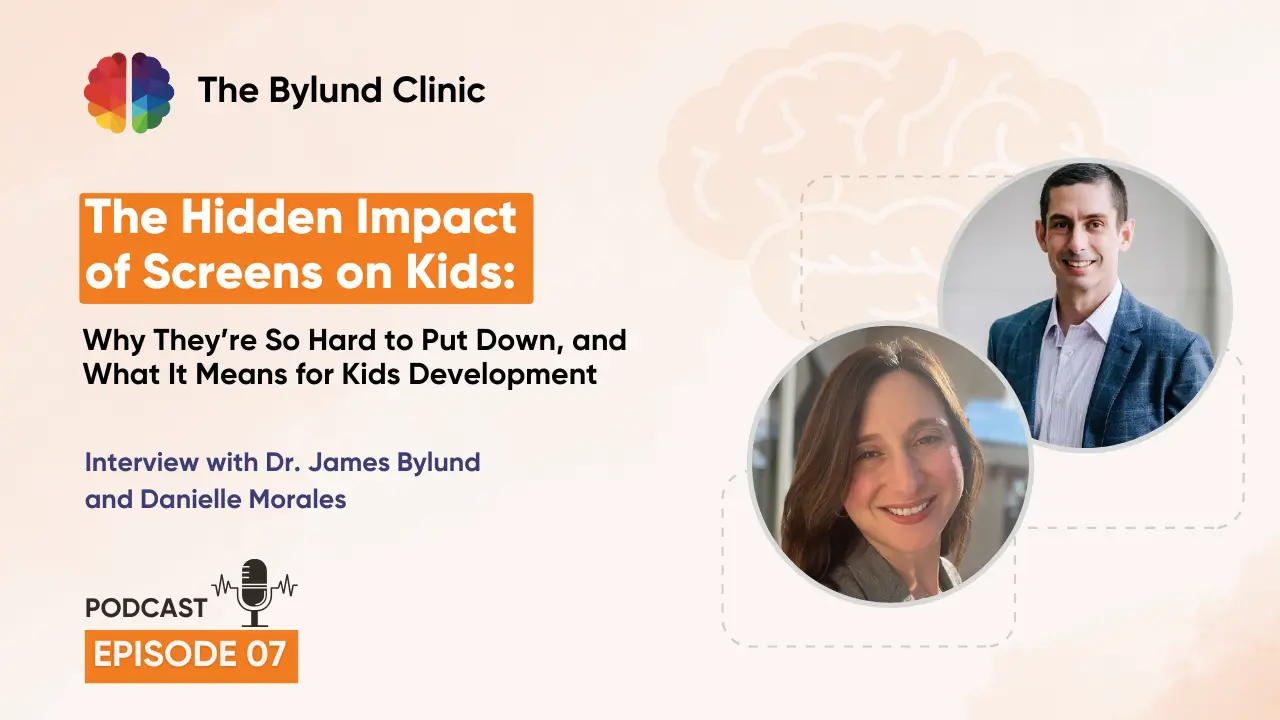
Interview with Dr. James Bylund & Danielle Morales


In this episode, we continue our deep dive into screen time, this time focusing on screen dependency, why neurodiverse kids may be more susceptible, and how to intervene when screen use starts to impact daily life.
We break down:
- Signs of screen dependency – when tech use starts interfering with academics, relationships, and emotional well-being
- Why kids with ADHD, autism, anxiety, or depression may rely more on screens
- The pros and cons – when screen-based activities provide a safe space vs. when they become problematic
- What treatment looks like – from setting family tech boundaries to seeking professional intervention
If your child’s screen use feels like it’s taking over, this episode will help you understand the warning signs and what steps to take next.
Key Topics Covered in This Episode
The Warning Signs of Screen Dependency
- When screen use interferes with academics, relationships, or emotional well-being
- Increased frustration, anxiety, or meltdowns when screens are taken away
- Disrupted sleep patterns and reduced interest in offline activities
Looking for professional support? Learn more about our Mental Health Therapy for Kids.
Why Neurodiverse Kids Are More Vulnerable to Screen Addiction
✓ Kids with ADHD, autism, anxiety, or depression often use screens as a coping mechanism
✓ Dopamine-driven behaviors in ADHD increase screen reliance
✓ Social difficulties can lead to excessive online interaction over real-life engagementConcerned about ADHD? Learn More About ADHD in Kids.
The Pros & Cons of Screen-Based Activities
When technology provides a safe space for neurodiverse kids
When screens become a barrier to emotional regulation and healthy habitsStruggling with academic challenges? Check out our Educational Therapy Services.
How to Break the Cycle: Setting Boundaries & Seeking Support
- Creating healthy tech habits at home
- When to seek professional intervention for screen dependency
- Behavioral therapy & expert guidance for long-term success
Listen Now & Take Action!
If your child’s screen use feels out of control, this episode will help you identify the warning signs and take action to create healthier tech habits.
Need professional support? Book a Consultation.
Leave a Reply
Your email address will not be published. Required fields are marked *
The Bylund Clinic Podcasts
Get notified about updates and be the first to get early access to new episodes.

Guests

James Bylund
Psy.D, ABSNP
Dr. James Bylund brings a robust educational and professional background to his role as a licensed clinical and educational psychologist. With a Doctorate in Psychology (Psy.D.) and board certification as a Diplomate of the American Board of School Neuropsychology (ABSNP), Dr. Bylund is highly specialized in educational and neuropsychological assessment.

Danielle Morales
MA/CAS, LEP, NCSP
Danielle Morales has been a school psychologist since 2014, and earned her MA and CAS from the State University of New York at Plattsburgh. She is a Licensed Educational Psychologist in California (LEP #4035) and a Nationally Certified School Psychologist (NCSP).
James Bylund
Psy.D, ABSNP
Dr. James Bylund brings a robust educational and professional background to his role as a licensed clinical and educational psychologist. With a Doctorate in Psychology (Psy.D.) and board certification as a Diplomate of the American Board of School Neuropsychology (ABSNP), Dr. Bylund is highly specialized in educational and neuropsychological assessment.
NEWSLETTER SIGNUP
Be a part of our journey - sign up for updates and inspiration
The Bylund Clinic Podcasts
Get notified about updates and be the first to get early access to new episodes.